
LED wall specifications, explained
Typical figures for every class of LED screen we supply, and what each number on a spec sheet means for your space.
Indoor LED walls
For showrooms, lobbies, boardrooms, banquet halls and auditoriums.
| Pixel pitch | LED type | Pixel density | Typical cabinet | Brightness | Refresh rate | Grey scale | Viewing angle (H/V) | Protection | Power, avg / max | Service access | Closest comfortable viewing |
|---|---|---|---|---|---|---|---|---|---|---|---|
| P1.2 – P1.5 | COB or SMD 1010 | 444,444 px/m² (P1.5) | 600 × 337.5 mm die-cast aluminium (16:9) | 500 – 800 nits | 3,840 Hz and above | 14 – 16 bit | 160° / 160° | IP40 front (COB tougher to knocks) | 150 / 450 W/m² | Front | 1.2 – 1.5 m |
| P1.86 | SMD 1515 | 289,051 px/m² | 640 × 480 mm die-cast aluminium | 600 – 800 nits | 3,840 Hz | 14 – 16 bit | 160° / 140° | IP30 – IP40 | 180 / 550 W/m² | Front or rear | 1.9 m |
| P2.0 | SMD 1515 | 250,000 px/m² | 640 × 480 mm die-cast aluminium | 600 – 900 nits | 3,840 Hz | 14 – 16 bit | 160° / 140° | IP30 – IP40 | 180 / 550 W/m² | Front or rear | 2 m |
| P2.5 | SMD 2121 | 160,000 px/m² | 640 × 480 or 500 × 500 mm | 800 – 1,000 nits | 1,920 – 3,840 Hz | 14 bit | 160° / 140° | IP30 – IP40 | 200 / 600 W/m² | Front or rear | 2.5 m |
| P3.91 (indoor) | SMD 2121 | 65,410 px/m² | 500 × 500 or 500 × 1000 mm | 800 – 1,200 nits | 1,920 – 3,840 Hz | 14 bit | 160° / 140° | IP30 – IP40 | 200 / 600 W/m² | Rear | 4 m |
Typical values for this class of screen. The exact model we quote comes with its own manufacturer spec sheet, which we share before you order.
Outdoor LED screens
For shop fronts, facades, billboards and stadiums. Outdoor screens need high brightness and IP65 sealing on both sides.
| Pixel pitch | LED type | Pixel density | Typical cabinet | Brightness | Refresh rate | Grey scale | Viewing angle (H/V) | Protection | Power, avg / max | Service access | Closest comfortable viewing |
|---|---|---|---|---|---|---|---|---|---|---|---|
| P3.91 | SMD 1921 | 65,410 px/m² | 500 × 500 or 500 × 1000 mm die-cast | 4,500 – 5,500 nits | 3,840 Hz | 14 bit | 140° / 120° | IP65 front and rear | 250 / 750 W/m² | Front or rear | 4 m |
| P4 – P5 | SMD 1921 / 2727 | 62,500 px/m² (P4) | 640 × 640 or 960 × 960 mm | 5,000 – 6,500 nits | 1,920 – 3,840 Hz | 14 bit | 140° / 120° | IP65 front and rear | 280 / 800 W/m² | Front or rear | 4 – 5 m |
| P6 – P8 | SMD 3535 / 2727 | 27,778 px/m² (P6) | 960 × 960 mm steel or aluminium | 6,000 – 7,000 nits | 1,920 Hz and above | 14 bit | 140° / 120° | IP65 front and rear | 300 / 850 W/m² | Rear | 6 – 8 m |
| P10 | SMD 3535 or DIP | 10,000 px/m² | 960 × 960 mm steel | 6,500 – 8,000 nits | 1,920 Hz and above | 14 bit | 120° / 60° | IP65 front and rear | 300 / 900 W/m² | Rear | 10 m |
Typical values for this class of screen. The exact model we quote comes with its own manufacturer spec sheet, which we share before you order.
Common to all our LED walls
- Input power
- 100 – 240 V AC, 50 / 60 Hz (Indian mains)
- Lifespan
- About 1,00,000 hours to half brightness, as rated by makers; real life depends on brightness and care
- Colour temperature
- Adjustable, typically 3,200 – 9,300 K
- Contrast
- 3,000:1 to 10,000:1 and above (higher on COB and black-face LEDs)
- Operating temperature
- Indoor 0 – 40 °C; outdoor −20 to +50 °C
- Inputs
- HDMI, DVI, DisplayPort or SDI through the video processor; Wi-Fi / 4G / USB players for signage
- Control
- Sending card or video processor, receiving card in every cabinet, PC or app software for content and scheduling
- Calibration
- Point-by-point brightness and colour calibration at the factory; re-calibration on site when needed
Pitch and pixel density
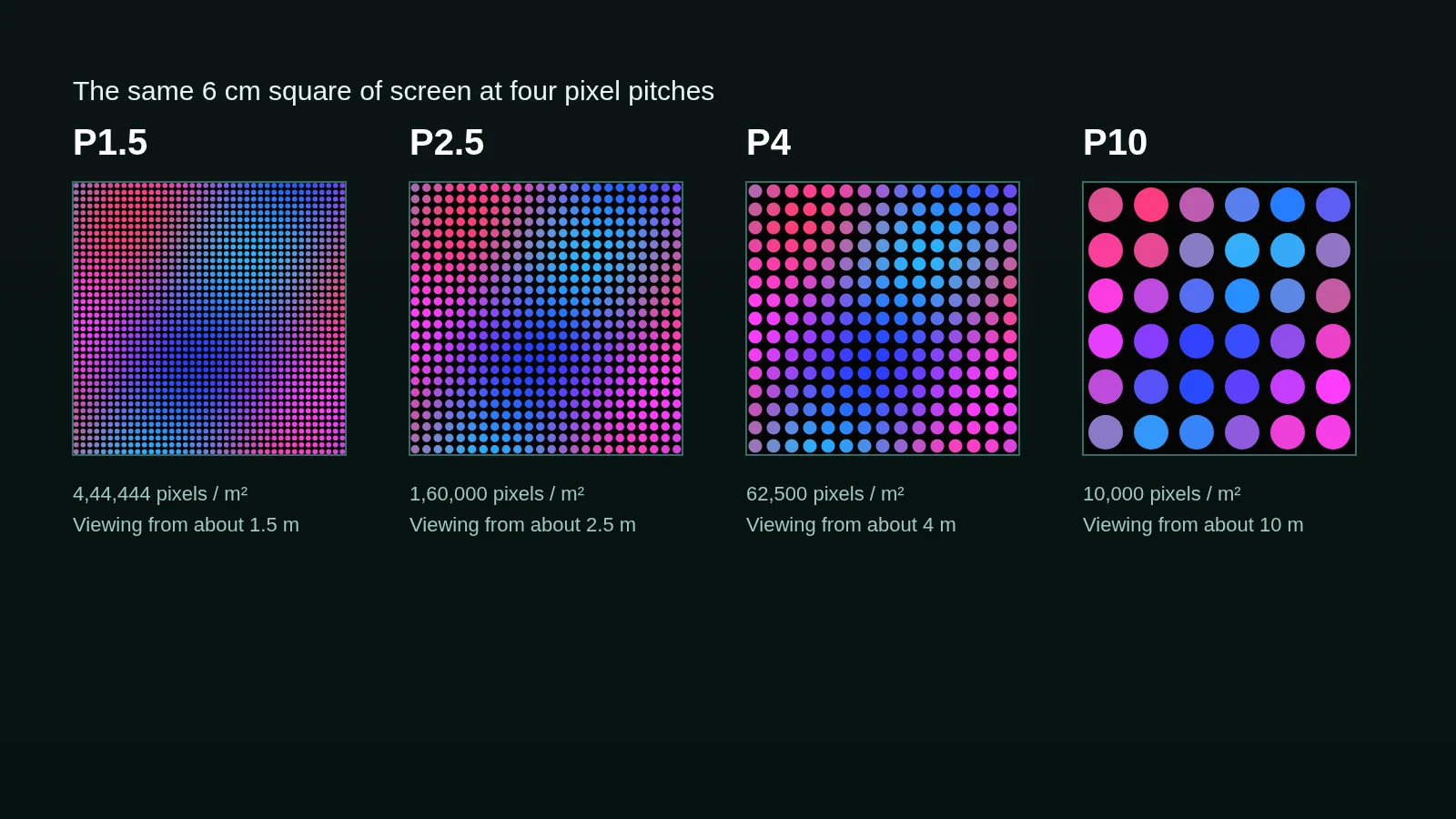
Pixel density rises with the square of the pitch: a P2.5 screen has 1,60,000 pixels per square metre, a P1.5 screen about 4,44,000. That is why fine-pitch screens cost so much more, and why the pitch should follow the viewing distance.
What the numbers on a spec sheet mean
- Pixel pitch (P)
- Distance between pixels in millimetres. Smaller pitch = sharper up close, more LEDs, higher price.
- Brightness (nits)
- Indoor walls need 600 – 1,000 nits; screens facing sunlight need 5,000 nits or more.
- Refresh rate (Hz)
- 3,840 Hz and above avoids flicker and lines when the screen is filmed on phones or cameras.
- Grey scale (bit)
- How many shades each colour can show. 14 – 16 bit gives smooth gradients at low brightness.
- IP rating
- Protection from dust and water. Outdoor screens need IP65 on the front and the back.
- SMD, COB and GOB
- SMD: each LED in its own package. COB: LEDs sealed under one resin layer. GOB: SMD with a protective glue coat.
- Front or rear service
- Front service lets modules come out from the front, so the screen can sit flat on a wall.
- Video processor
- The box that takes your HDMI or other input and maps it to the wall, scaling and switching sources.
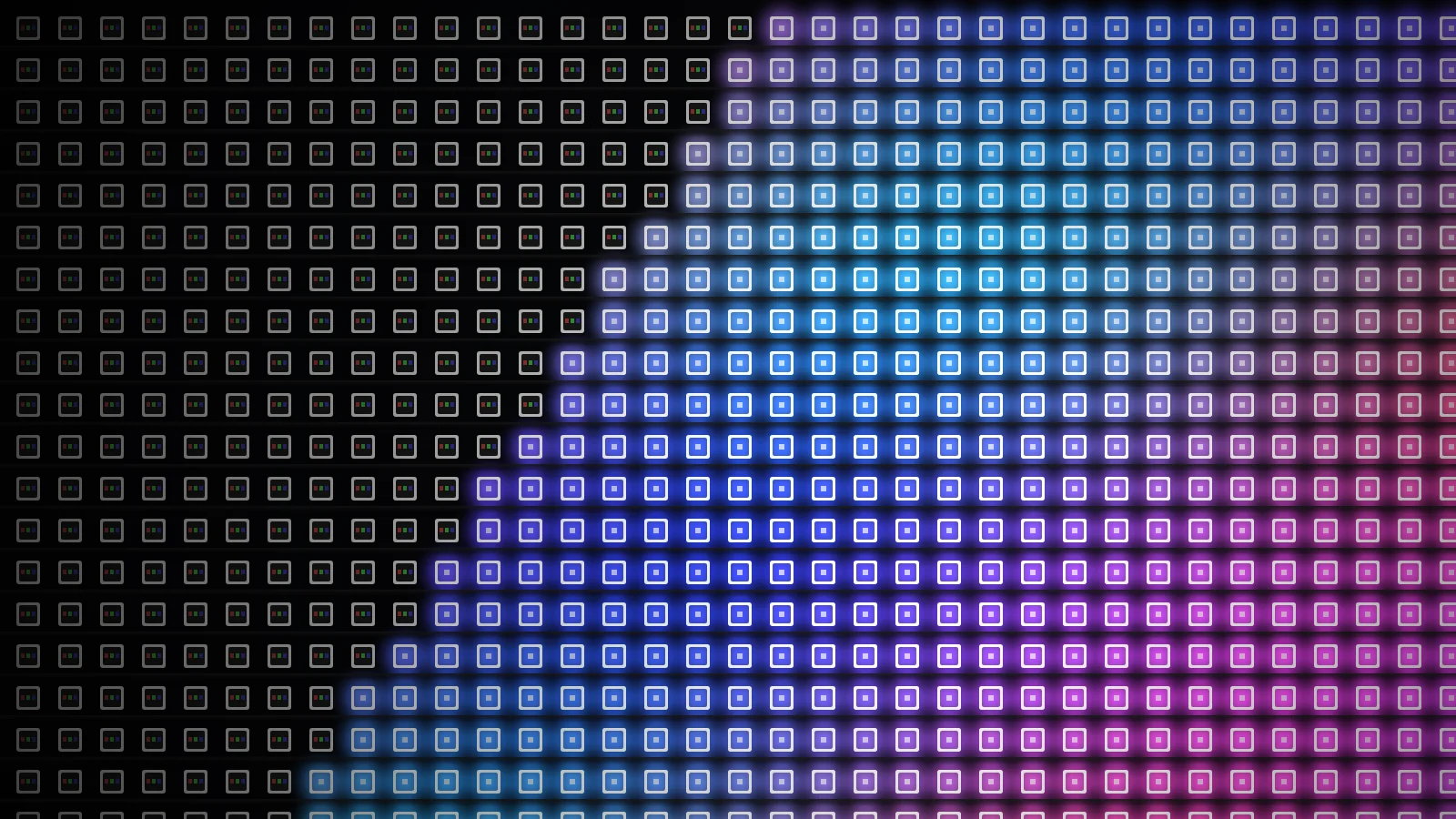
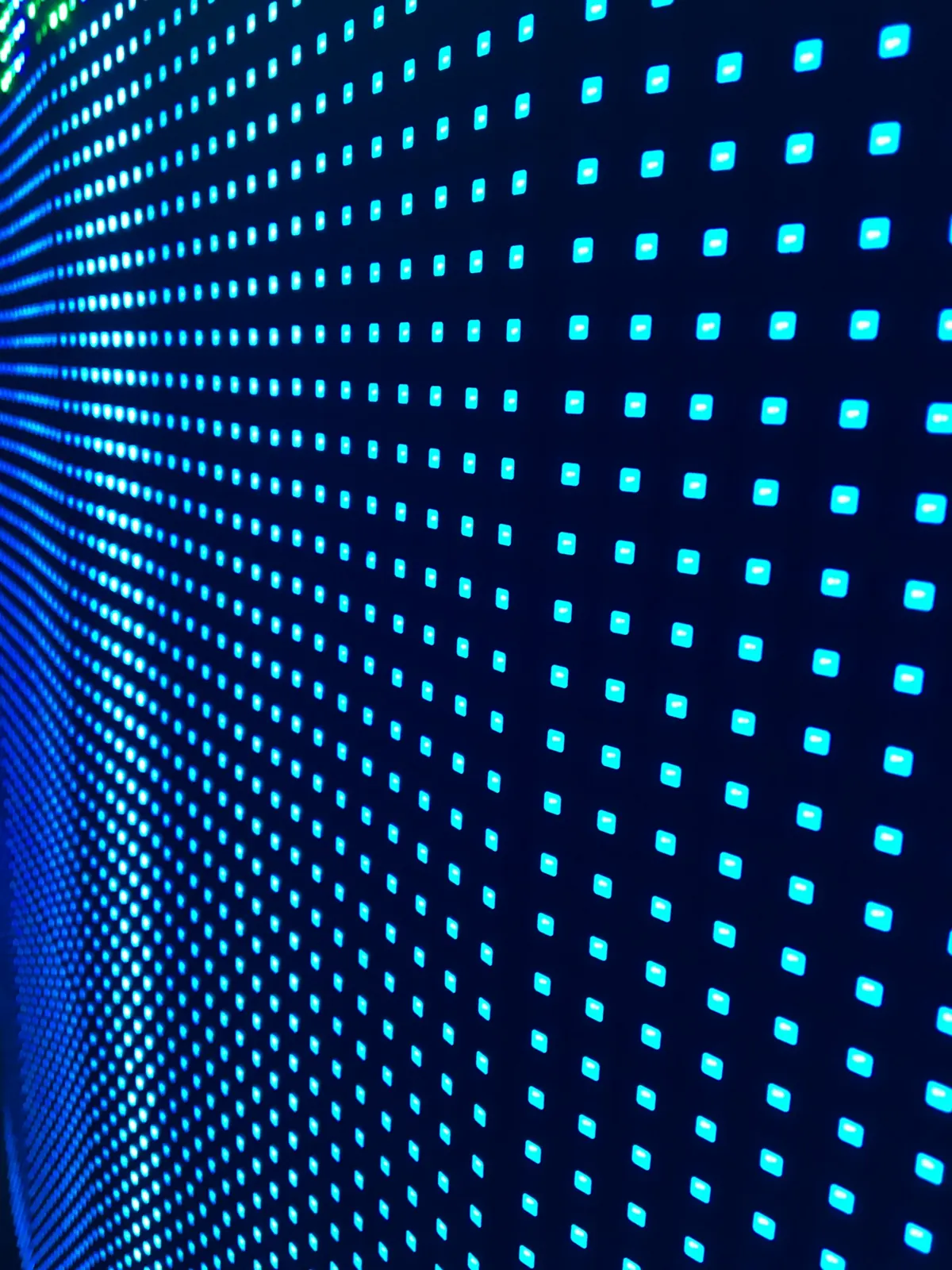
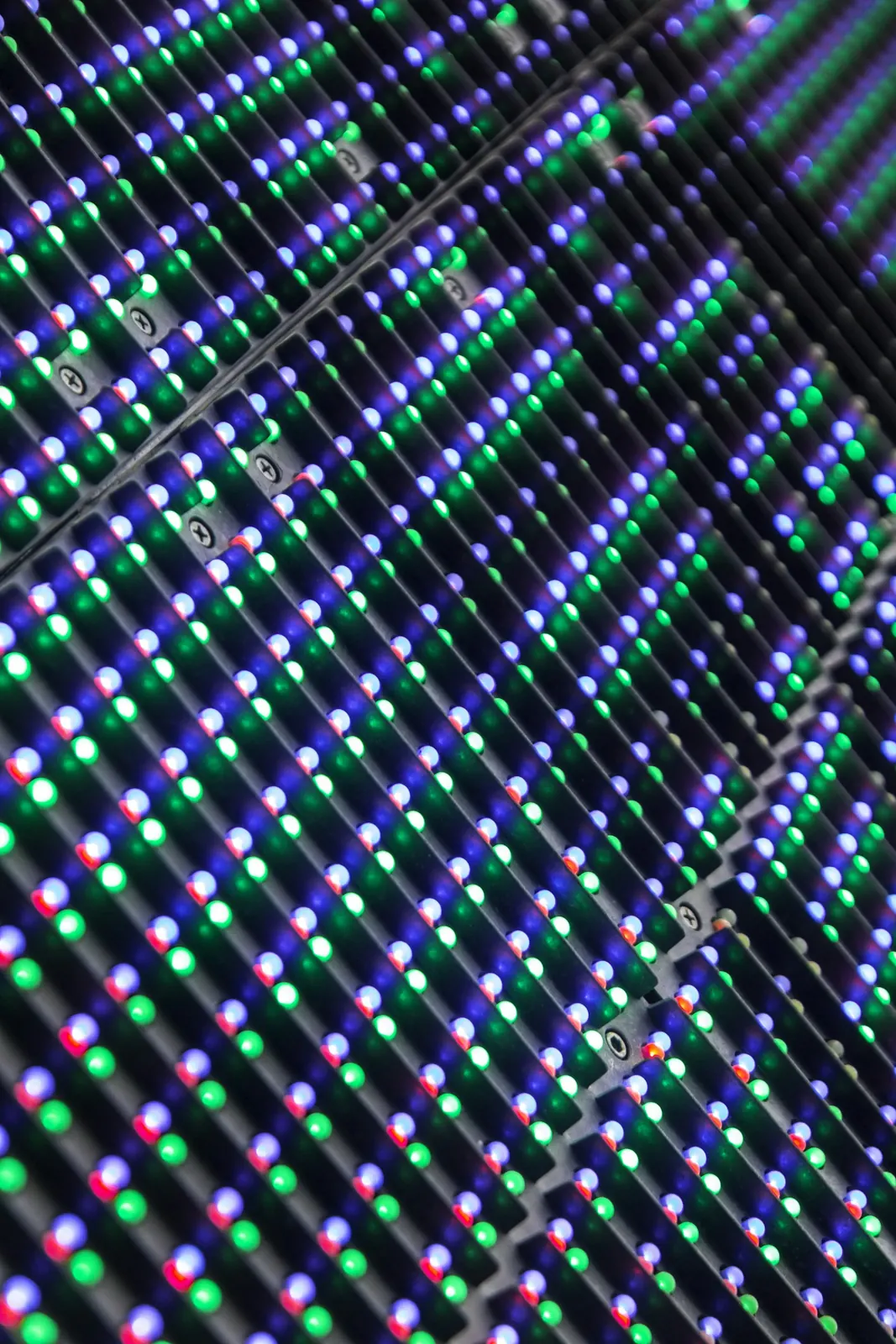
Close-ups
Pitch and viewing distance
Pay for the pitch your viewers need, not the finest one available.
| Pixel pitch | Comfortable viewing distance | Typical use |
|---|---|---|
| P1.5 and below | From about 1.5 m | Boardrooms, control rooms, broadcast studios |
| P1.86 – P2 | From about 2 m | Meeting rooms, retail counters, premium lobbies |
| P2.5 | From about 2.5 m | Showrooms, banquet halls, auditoriums, restaurants |
| P3.9 – P5 | From about 4–5 m | Shop fronts, facades, large halls, mall atriums |
| P6 – P10 | From about 6–10 m | Billboards, highways, stadiums, rooftops |
Take the LED wall on monthly rent
We install an LED wall from our own 4,800+ sq ft stock on your premises. You pay a monthly rent with maintenance included, month to month, and can upgrade it or buy it out later.
Frequently asked questions
What refresh rate should an LED wall have?
3,840 Hz or more if the screen will be filmed or photographed, for example in banquet halls, studios and broadcast. 1,920 Hz is acceptable for signage that is only watched in person.
How bright should an indoor LED wall be?
600 to 1,000 nits is enough indoors; more is uncomfortable and shortens LED life. Screens facing a glass shop front need more, often 1,500 to 2,500 nits.
What does IP65 mean?
Dust-tight and protected against water jets. Outdoor screens in East India should be IP65 on the front and the back because of monsoon rain.
How much power does an LED wall use?
Typically 150 to 300 W per square metre on average and two to three times that at full white. A 10 × 6 ft indoor wall (about 5.6 m²) averages roughly 1 to 1.5 kW.
Are these the specifications of the exact screen I will get?
They are typical figures for each class. The model we quote comes with its own manufacturer spec sheet, which we share before you order.
Tell us about your space
Share a few details and our team will call you to plan a site survey, in Kolkata or anywhere in East and North-East India.
- Free advice on pitch, size and brightness
- Branded or imported panels to suit your budget
- Installation and AMC by our own team